


Street Tuned AI: HP Tuners & EFILive Datalog Analysis
Street Tuned AI is an AI-powered datalog analysis assistant built specifically for HP Tuners and EFILive owners who tune their own vehicles. Instead of scrolling through thousands of rows of raw scanner data by hand, you upload a CSV log and receive a clear, structured report explaining what the data shows, what to double-check, and what to log next. For DIY tuners working on LS/LT swaps, Ford Coyote and EcoBoost platforms, Mopar NGC vehicles, or diesel trucks, this kind of structured feedback can mean the difference between a confident change and a guess.

A structured report from Street Tuned AI highlights exactly which tables and RPM ranges deserve attention.
What Is Street Tuned AI?
Street Tuned AI is a patent-pending datalog analysis tool that reads HP Tuners and EFILive CSV exports and converts them into a readable tuning report. It does not write or flash any calibration file. Instead, it runs deterministic safety checks first, then applies AI interpretation to flag what the log shows, what remains uncertain, and which channels to log next.
In practice, this means a user uploads a log, and within minutes receives guidance pointing to specific cells, RPM ranges, and confidence ratings rather than a vague summary. Consequently, the gap between collecting data and actually understanding it shrinks dramatically. Moreover, because safety validation happens before any AI step, the report is grounded in verified data rather than guesswork.
How This AI Tuning Assistant Works
Understanding the mechanics helps explain why this approach differs from simply eyeballing a log in HP Tuners' own viewer. The process follows a consistent sequence every time a file is uploaded, which keeps results comparable across sessions.
- Export the CSV datalog from HP Tuners or EFILive after a drive that includes idle, cruise, and at least one wide-open throttle pull.
- Upload the file to a saved vehicle profile so the platform can match it to the correct engine platform and sensor layout.
- Automated, deterministic checks scan for missing channels, sensor faults, or inconsistent readings before any AI interpretation begins.
- Review the resulting report, which points to specific tables and RPM ranges along with a confidence rating for each finding.
- Follow the next-log plan, which often includes a ready-to-load HP Tuners channel file, and record a follow-up drive to confirm results.
As a result, the workflow mirrors how an experienced tuner would approach a log, except it happens consistently and quickly, regardless of how busy the shop or how late the garage session runs.

LS and LT swap builds were the starting point for this datalog analysis platform before it expanded to other engine families.
Platform Coverage: From LS/LT Swaps to Coyote and Mopar Builds
Street Tuned AI began with GM LS and LT platforms, which remain the most common swap engines among DIY builders. Since then, coverage has expanded to Ford Coyote, Ford EcoBoost, Mopar NGC, Cummins, and Duramax logs. Each platform edition is tuned to the quirks of that engine family, which matters because an LS knock pattern does not read the same way as a Coyote one.
For example, the CoyoteTunedAI edition focuses specifically on Ford Coyote datalog patterns, while the Mopar Edition addresses NGC-specific channel behavior. In addition, builders working on cammed LS and LT engines can reference the base tune builder guidance for LS swaps and cammed engines as a companion resource when starting a new build.
Why Datalog Review Software Matters for DIY Tuners
On-board diagnostics standards have required consistent sensor reporting across gasoline vehicles sold in the United States since 1996, according to the OBD-II standard documented on Wikipedia. That standardization is precisely why tools like HP Tuners and EFILive can capture comparable channel data across such a wide range of vehicles. However, standardized data does not automatically mean easy interpretation. A single drive can generate thousands of data rows, and manually isolating a misbehaving table from that volume is genuinely time-consuming, even for experienced tuners.
Therefore, structured datalog analysis software exists to close that gap. Rather than replacing the tuner's judgment, it narrows the search so attention goes to the handful of cells that actually need review.
Guided Workflows That Help New and Experienced Tuners
Not every DIY tuner starts at the same skill level, and Street Tuned AI accounts for that with several guided paths. The Start My First Log workflow walks brand-new users through exactly what to record before their first upload, which removes much of the early-stage guesswork. Startup Builder, on the other hand, focuses specifically on cold-start and warm-up behavior, an area that frequently gets overlooked in favor of wide-open throttle data.
Meanwhile, Tune Compare lets builders place two tune files side by side to see exactly what changed between revisions. This is particularly useful after a shop visit or a software update, since it highlights differences that might otherwise go unnoticed. Together, these workflows cover the practical stages a tuner moves through: first log, startup tuning, and ongoing comparison between tune versions.
Safety Checks and Data Validation Before AI Interpretation
A core design decision behind Street Tuned AI is running deterministic checks before any AI model touches the log. In other words, the system first confirms that sensor readings are plausible, that expected channels are present, and that the data is internally consistent. Only after that validation step does the AI interpretation layer generate guidance.
This sequencing matters because an AI model is only as reliable as the data it receives. Consequently, catching a faulty sensor reading or a missing channel before interpretation prevents the report from building conclusions on bad data. For a deeper look at how an engine control unit manages sensor inputs, the Wikipedia entry on ECUs offers useful background for readers newer to the topic.
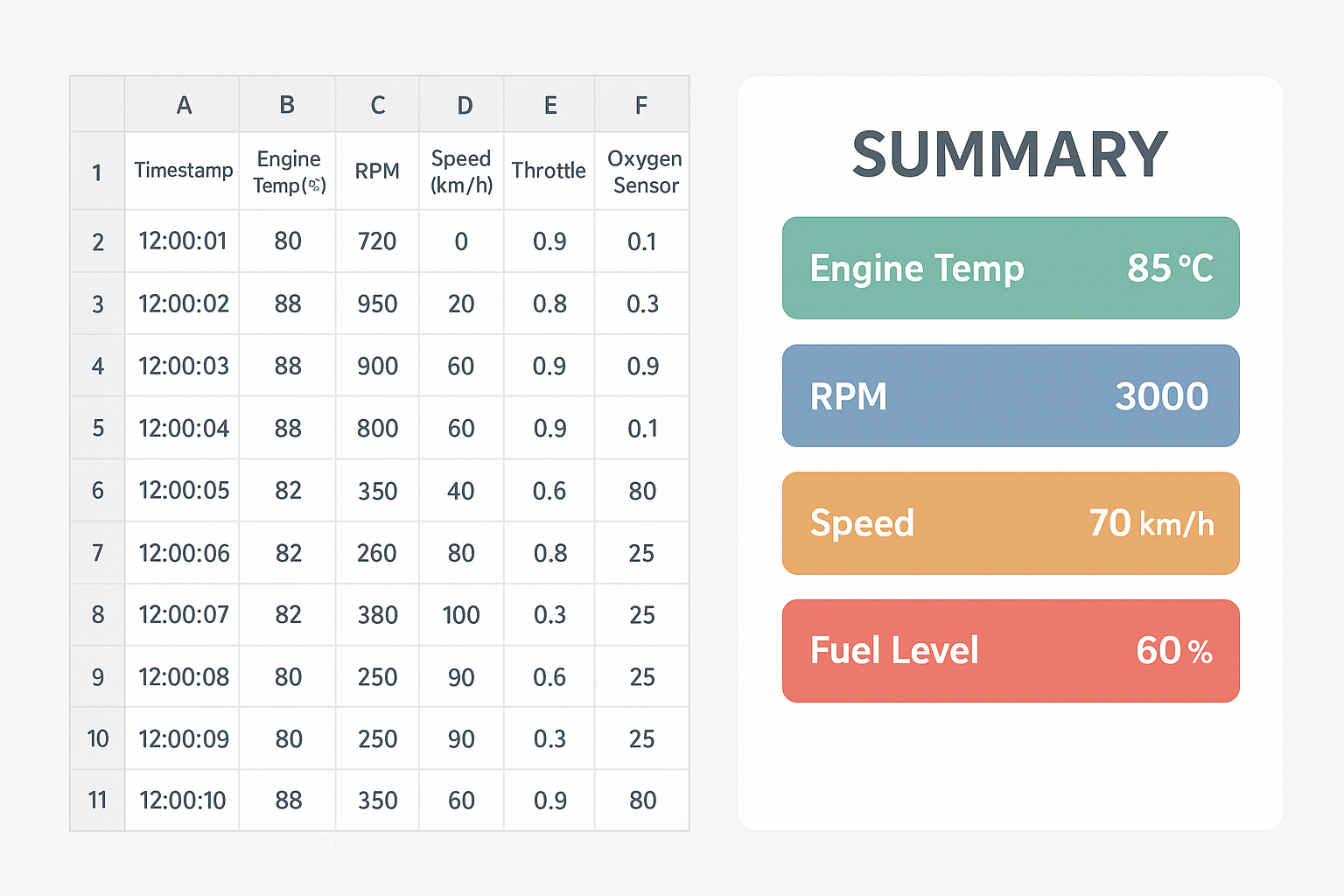
Street tuned ai converts raw spreadsheet rows into a summary that highlights only the cells worth reviewing.
Street Tuned AI Compared to Traditional Tuning Methods
Traditionally, DIY tuners either relied entirely on forum knowledge and trial-and-error, or they paid a professional tuner for every log review. Both approaches have value, but each carries tradeoffs. Forum-based self-teaching is slow and inconsistent, while professional review can be expensive for frequent iteration during a build.
By contrast, Street Tuned AI sits between those two extremes. It does not replace professional tuning expertise, and it explicitly does not write or flash calibration files. Instead, it gives DIY tuners a consistent, structured second opinion on their own logs, which many builders use to prepare better questions before consulting a professional tuner or to confirm their own changes between paid sessions.
Getting Started with Street Tuned AI
Getting started is straightforward. First, create a saved vehicle profile so future logs are grouped correctly. Next, run the Start My First Log workflow to capture a baseline drive. After that, upload the CSV and review the structured report, paying close attention to the confidence ratings attached to each finding.
For readers who want to see the core product page, the Street Tuned AI product page outlines current subscription and pay-per-review pricing options. Developers or technically curious users can also review the agents documentation for details on how the platform's automated checks are structured. Finally, visiting streettunedai.com directly provides access to live demos and customer support for anyone with platform-specific questions.
Frequently Asked Questions About Street Tuned AI
What is Street Tuned AI?
Street Tuned AI is a patent-pending AI datalog analysis and tuning assistant for HP Tuners and EFILive owners that turns raw CSV scanner data into a structured report. It highlights what the data shows, what to verify, what not to change, and exactly what to log next.
How does Street Tuned AI analyze HP Tuners datalogs?
After you upload a CSV log, the platform runs deterministic safety checks and data validation before any AI interpretation happens. It then generates table-level guidance pointing to specific cells and RPM ranges along with a confidence rating for each finding.
Does Street Tuned AI write or flash tune files?
No. Street Tuned AI does not write, flash, or remotely modify any ECU calibration. It provides analysis, guidance, and next-log plans so you remain in full control of every change made through HP Tuners or EFILive.
Which platforms does Street Tuned AI support?
Street Tuned AI started with GM LS and LT platforms and has expanded to cover Ford Coyote, Ford EcoBoost, Mopar NGC, Cummins, and Duramax logs. Platform-specific editions, such as the Mopar Edition and CoyoteTunedAI, tailor guidance to each engine family.
How much does Street Tuned AI cost?
Street Tuned AI offers both subscription access and pay-per-review pricing, so DIY tuners can choose based on how often they log. Checking the product page gives the most current plan details.
How long does a datalog review take with Street Tuned AI?
Most uploaded logs are processed into a structured report within minutes rather than hours. That turnaround is significantly faster than manually scrolling through thousands of rows of raw scanner data by hand.
What is the difference between Street Tuned AI and a human tuner?
A human tuner interprets logs based on individual experience, while Street Tuned AI applies deterministic validation plus AI pattern analysis consistently every time. Many DIY tuners use it alongside professional input rather than as a full replacement.
What file formats does Street Tuned AI accept?
The platform is built around CSV datalog exports from HP Tuners and EFILive. These are the standard formats both tools use when exporting recorded scanner sessions.
What is the Tune Compare feature used for?
Tune Compare lets you place two tune files side by side to see differences in tables, settings, and calibration structure. It is useful for tracking changes between revisions or comparing a base tune against a modified file.
What mistakes do DIY tuners make without datalog analysis software?
Common mistakes include misreading knock retard, overlooking fueling trends across RPM ranges, and changing multiple tables at once without isolating the cause. Structured analysis helps catch these issues before a change makes the problem worse.
Is Street Tuned AI suitable for first-time HP Tuners users?
Yes. The Start My First Log workflow walks new users through exactly what to record and upload, which removes much of the guesswork around early logging sessions.
What should I log before using Street Tuned AI for the first time?
A baseline drive covering idle, cruise, and a few wide-open throttle pulls typically gives the platform enough data to produce a meaningful first report. Ready-to-load HP Tuners channel files are provided to make sure the right parameters are captured.
Does Street Tuned AI work with EFILive as well as HP Tuners?
Yes, Street Tuned AI supports CSV datalogs exported from both HP Tuners and EFILive. The underlying analysis approach stays the same regardless of which scanning software produced the log.
Final Thoughts
Ultimately, Street Tuned AI exists to make DIY datalog review faster and more consistent without taking control away from the person doing the tuning. From LS and LT swaps to Coyote, EcoBoost, and Mopar builds, the platform applies the same core process: validate the data, interpret it with AI, and hand back clear guidance on what to check next. For anyone juggling thousands of rows of raw scanner data after a drive, that structure turns a tedious review into a manageable next step, which is exactly the problem street tuned ai was built to solve.